Introduction
In modern internet architectures, “the practical deployment of many IP addresses on U.S. servers for load balancing and anti-cheat purposes” has become a common practice to improve availability and security. This article briefly explains how to integrate multi-IP strategies into load balancing and anti-cheat systems, balancing performance with compliance, making it suitable for operations and security teams seeking scalable and robust solutions.
Overview: The core purpose of multi-IP deployment
The use of a large number of IP addresses is primarily aimed at dispersing traffic, reducing pressure on individual points, improving resistance to DDoS attacks and fraud prevention, as well as providing more granular control for regional distribution and blocklist/allowlist management. Through strategic allocation and monitoring, multi-IP deployment can enhance system resilience and detection accuracy without affecting the user experience.
US servers Advantages of IP diversification
Using multiple IPs on US servers helps to better cover different network operators and regional exit points, reducing performance fluctuations across network segments ; It also facilitates the isolation and tracing of abnormal requests, improves the rate of fraud detection, and ensures service stability by quickly switching to alternative IP pools during traffic surges.
Practical deployment methods in load balancing
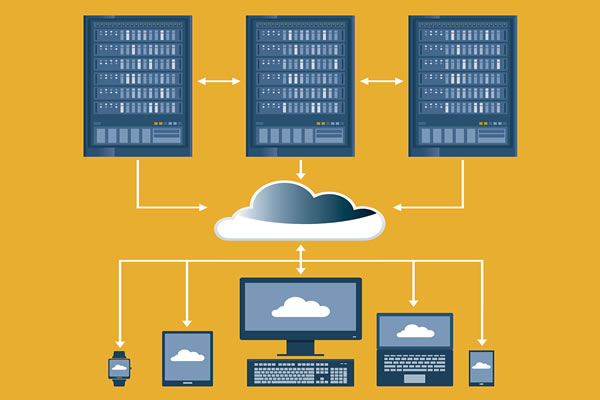
The load balancing layer can map multiple public IP addresses to different backend pools, enabling fine-grained scheduling through Layer 4 and Layer 7 load balancing strategies. Common practices include allocating backend groups by IP range, scaling dynamic IP pools, and distributing traffic based on weights to balance traffic and ensure session consistency.
Combining DNS polling with Anycast
DNS polling provides a simple multi-IP allocation mechanism, while Anycast enables nearest-route selection at the network layer. Combining the two can improve availability and routing efficiency at different levels, but care must be taken with DNS TTL management and session persistence under Anycast, with health checks and connectivity probes used to reduce the side effects of switching.
IP policies in anti-cheat scenarios
In anti-cheat scenarios, multiple IPs are used to separate suspicious traffic, establish a reputation hierarchy, and enable controlled blocking. Methods such as dynamic blocklists and allowlists, threshold-triggered IP isolation, and noise traffic induction can be employed, combined with fingerprinting, behavioral analysis, and rate limiting, to improve the controllability of false positives while maintaining service accessibility.
Session persistence and traffic routing strategies
To achieve session persistence, sticky mechanisms based on IP, cookies, or application-layer tokens can be used, combined with consistent hashing to ensure stable routing in multi-IP environments. For long-lived connections and real-time applications, it is recommended to use session sticking combined with backend synchronization or shared session storage to reduce switching costs.
Safety and compliance considerations
When using a large number of IPs, it is essential to ensure robust logging, traceability capabilities, and abuse handling procedures, as well as to set appropriate rate limits and alert thresholds. At the same time, pay attention to data sovereignty and privacy compliance. Retain access logs as needed and implement auditable IP management strategies to meet audit and legal compliance requirements.
Summary and Recommendations
Overall, the “practical deployment methods for many IP addresses on U.S. servers in load balancing and anti-cheat systems” should be centered around observability, automation, and controllable risks. It is recommended to first define an IP pool hierarchy strategy and improve health checks and monitoring. Gradually adopt a combination of DNS/Anycast and load balancing, and optimize anti-cheat rules and session strategies through continuous replay and A/B testing.
- Latest articles
- Evaluate The Access Performance Of Domestic Cn2 Taiwan From The Perspective Of SEO And GEO Optimization And Propose Improvements
- A Must-read For Corporate Decision-makers: How Much Does A Korean Cloud Server Cost? Suggestions On Weighing Against Service Quality Assurance
- Hong Kong Cn2 Lightweight Deployment Process Guide From Purchase To Online
- Enterprise Buying Guide Why Renting A German Server Dedicated Line Is More Reliable Than An Ordinary Line
- Hong Kong Cloud Server CDN Deployment Process And Cost Optimization Practical Guide
- Why Hong Kong Vps Has Natural Advantages In Network Connectivity And Bandwidth Stability
- Achieve Independent Traffic Isolation For Different Business Lines Through Multiple IP Addresses Of US High-defense Servers
- Reliability Evaluation Report Of Vietnam Cn2 Service Provider In Enterprise-level Application Deployment
- A Must-read For Enterprise Users: Which Cloud Servers Are Good In Malaysia And Compared With Service Providers?
- Detailed Malaysia Vps Evaluation Report Helps You Choose Suitable Nodes And Configurations
- Popular tags
-

Detailed Guide To U.S. Server Hosting For Cross-Border Businesses: Practical Tips To Improve Stability
A detailed guide to hosting American servers for cross-border businesses, covering practical tips such as network node selection, bandwidth management, compliance, security, and high availability to improve stability and user experience. -

Practical Deployment And Maintenance Recommendations For US Site Cluster Servers For Marketing Teams
Providing marketing teams with deployment and maintenance advice for U.S.-oriented site cluster servers, covering network, IP policy, server architecture, security, backup, monitoring, and compliance, while balancing SEO and GEO optimization. -

Configuration Recommendations Of Hengchuang, An American High-defense Server For Games And Live Broadcasts
the us high-defense server hengchuang configuration recommendations for games and live broadcasts cover network, hardware, system and operation and maintenance optimization, focusing on ddos protection, low-latency node layout and elastic expansion to help improve usability and user experience.